It's a weekday morning and Meera is at her desk in Kochi with Kite, Zerodha's trading app, open on her phone. She has been watching one stock since nine o'clock: one of the biggest companies listed on the National Stock Exchange, trading around ₹1,500. (Which company doesn't matter, so we'll leave it unnamed, and every price in this chapter is illustrative.) The clock on her screen turns 9:15:00, the market opens, and she places a limit buy: 10 shares, at no more than ₹1,500 each. Under a second later the app says Complete. She owns 10 shares, bought at an average of ₹1,499.80.
That second hides a lot. At the moment she tapped, a large share of Zerodha's millions of users were doing something similar, because 9:15 is when the Indian market opens and everyone who decided overnight to buy or sell acts at once. Every one of those orders has to be checked against the customer's money before it leaves Zerodha, carried to NSE over dedicated lines, and placed in a strict order against the orders of every other broker in the country, so that whoever offered the best price first gets served first. And all the while, the prices on Meera's screen keep moving, which means the result of every trade has to be pushed back out to millions of phones within a fraction of a second.
Two very different organisations do this work. Zerodha is a broker: it holds Meera's account and money and talks to the exchange on her behalf, and in 2020 it ran all of this with a technology team of 30 people. NSE is the exchange: it runs the program that pairs buyers with sellers. In this case study we'll design both halves, the way an engineer would, starting with the most obvious design and fixing it where it breaks. The question we'll keep returning to is this: when Meera taps Buy at 9:15:00, how does her order get checked, placed in line fairly against everyone else's and matched, and how does the new price reach millions of screens, in well under a second? Along the way we'll go from boxes on a diagram down to the order book data structure, an auction algorithm, a single-threaded sequencer and the byte layout of a price update.
01What we're building, and how big
1.1What it has to do
Let's write down what the two halves must do for Meera's order. The broker, Zerodha, has to:
- Take the order from the app and give it an ID Meera can track.
- Check it against her account before anything leaves the building: does she have ₹15,000 available, is the price sensible, is she allowed to trade this stock?
- Send it to the exchange over a connection the exchange trusts, and track what the exchange says back.
- Show her live prices for everything on her watchlist, and update her orders, positions and money as trades happen.
The exchange, NSE, has to:
- Keep a list of every waiting buy and sell order for each stock.
- Match a new order against the waiting ones by a published rule, and report the resulting trades to both sides.
- Set a fair opening price each morning, after a night's worth of news.
- Publish every change to everyone at the same time.
- Hand the trades to a clearing corporation, which makes sure money and shares change hands afterwards.
And the qualities that matter, roughly in order:
- Fair: the rule that decides who trades first must be applied exactly, the same for everyone. If two brokers send orders at the same price, the one that arrived first must be filled first, and nobody may see prices before anyone else.
- Correct: Meera must never be able to spend the same ₹15,000 twice, and a trade the exchange reports must never be lost or reported twice.
- Fast and predictable: answers in milliseconds at the broker and far less at the exchange, with no long pauses, because a pause during a busy minute means orders queued behind it all trade at stale prices.
- Able to take the burst at 9:15, when traffic jumps many times over in a few seconds.
Notice how different this is from the other case studies so far. A ride-hailing app or a video service can be slightly wrong or slightly late and nobody notices. Here, "slightly wrong" means somebody's money went to somebody else, and the rules for who is first are written down by a regulator.
1.2How big is it?
Zerodha publishes its engineering on its blog, zerodha.tech, and the figures are dated. In April 2020 the company had about a million users active each day, handled 15 to 20% of daily retail trading in India, and broadcast about 16 million market ticks a second (a tick is one update to a price or quantity) to hundreds of thousands of concurrent users. By July 2021 it had over 6 million users, was handling over 12 million retail trades on a busy day, up from about 2 million in January 2020, and had "way more than a million" people connected to Kite at any moment. When Kite launched in 2015 it had barely a thousand concurrent users. Between 2020 and 2021 the technology team went from 30 people to 31.
NSE's numbers are larger again. Its annual report for the year to March 2024 says its trading platforms processed an average of over 14 billion messages a day (a message is any order, change or cancellation sent by a broker), across about 2 lakh (200,000) trading terminals, with capacity for over 5 million messages a second.
What matters as much as the size is the shape of the load. A 2020 post on zerodha.tech says it plainly: "A 10x burst in traffic over a period of 10 seconds is quite common on a trading platform." The busiest of those bursts is at 9:15.
Suppose a million people have Kite open, each looking at a watchlist of 20 stocks, and each stock's price changes about once a second. Zerodha sends each update to each person watching it as a small binary packet of 44 bytes. How many packets a second leave Zerodha, and how much bandwidth is that?
02Version 1: an exchange in a database
2.1The obvious design
Suppose we had to build a small exchange from scratch this afternoon. Most people would start with a web application in front of a database. There's an orders table with one row per waiting order: the stock, buy or sell, price, quantity and the time it arrived. When a new buy order comes in, a server asks the database for the cheapest waiting sell order for that stock, oldest first among equal prices, and if its price is at or below the buyer's limit, it records a trade and reduces both quantities. Many servers run in parallel to handle the traffic, and the apps talk to them over HTTPS.
Start with the lock. Every buy order for Meera's stock wants the same thing, the cheapest waiting sell order, so every one of them reaches for the same row. Only one transaction at a time can hold it, and the rest wait. So however many servers we add, orders for one stock are processed one after another anyway, plus the cost of all the waiting and retrying. Chapter 16 has a name for this: the servers are contending for one resource, and contention turns into long, unpredictable waits at the tail.
2.2Who was first?
A second problem is subtler, and for an exchange it matters most. Our rule says "among equal prices, oldest first". But "oldest" according to whom? Each of the twenty servers stamps the arrival time from its own clock, and clocks on different machines disagree by microseconds to milliseconds even when they're synchronised (chapter 26 explains why). If Meera's order lands on server 3 and another broker's order at the same price lands on server 11 a hundred microseconds later, server 11's clock might be running slightly behind and stamp its order as earlier. Then the other broker jumps the queue, and nobody can even tell it happened.
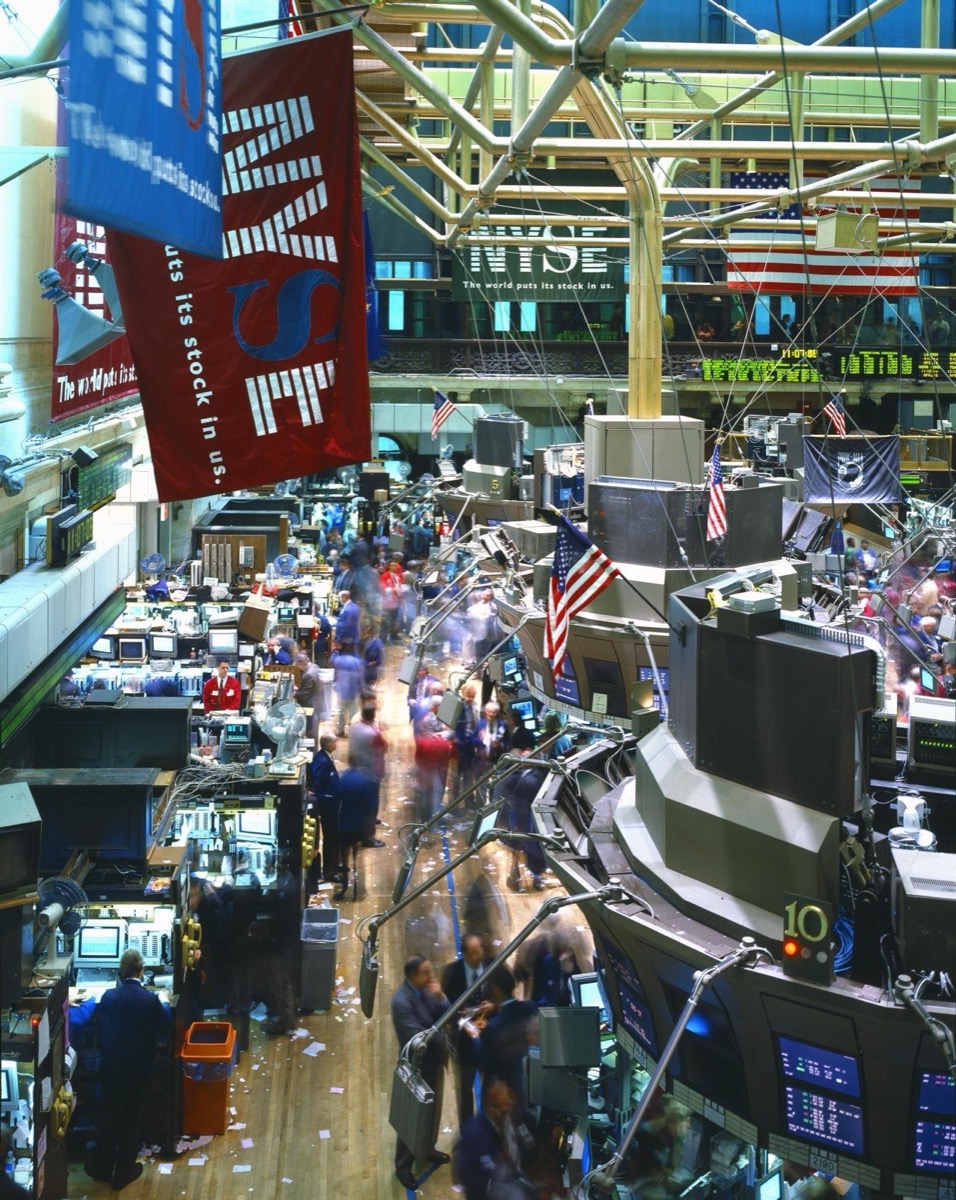
Exchanges solved this long before computers, and the photo shows how: for each stock, one place keeps one list, and everybody's order goes into that list in the order it physically arrived. There's no question of whose clock is right, because there's only one queue. Electronic exchanges use the same idea. Every order for a given stock passes through one point that gives it a position in line, and the position, not a clock reading, decides who is first. NSE's own description of its trading system says it in one line: orders are "first numbered and time-stamped on receipt and then immediately processed for potential match."
So the exchange half needs a single, ordered queue per stock, and a program that works through it one order at a time. That's sections 4 to 6. But before the order reaches the exchange at all, there's a question version 1 skipped.
2.3Why there's a broker in the middle
In version 1, Meera's app talks to the exchange directly. Real exchanges don't allow that. Only members, brokers approved by the exchange and the regulator, may connect, and each member is responsible for every order it sends. If Meera buys ₹15,000 of shares and doesn't pay, the exchange's side of the trade still settles; it's the broker who owes the money.
That responsibility is why the broker checks every order before sending it. Zerodha has to know, at the instant Meera taps Buy, whether she has the money, and it has to reserve that money so that a second order a millisecond later can't spend it again. It also has to keep its own connections to the exchange alive and fast, and show Meera what happened. That's the broker half of our design, and it's where the order goes first.
03The broker: Kite, the OMS and the risk check
3.1The path of Meera's order through Zerodha
When Meera taps Buy, the app sends the order to Zerodha's servers, and it passes through three stages before it leaves for NSE. Each stage has a name used across the industry.
The order management system (OMS) is the part that owns orders: it gives each one an ID, records every change to it, routes it to the right exchange and keeps track of what the exchange says back. The risk management system (RMS) is the gatekeeper inside the OMS's path: it checks each order against the customer's account and the rules, and rejects it if it fails. And the exchange gateway holds the actual connections to the exchange.
Zerodha's public API for developers, Kite Connect, documents this path in an unusual amount of detail, because an order placed through the API passes through visible intermediate states. Meera's order goes through the same ones:
| Status | What it means |
|---|---|
PUT ORDER REQ RECEIVED | Zerodha's backend has the request. |
VALIDATION PENDING | Waiting for the RMS to check it. |
OPEN PENDING | Passed the checks, waiting for the exchange to accept it. |
OPEN | The exchange has it, and it's waiting in the order book. |
COMPLETE | Fully filled. |
REJECTED / CANCELLED | Refused by the RMS or the exchange, or cancelled. |
A warning in the documentation tells you a lot about the design: when the API returns an order ID, that means the order was registered with the OMS, and "this does not guarantee the order's receipt at the exchange." The broker answers Meera's tap at once and finds out what the exchange did later. Her order also gets a second ID, exchange_order_id, which only exists once NSE has accepted it.
3.2The risk check has to be fast and exact
Correctness at the broker lives in the RMS, so let's look at what it does with Meera's order. A broker's pre-trade checks typically include:
- Margin: does the account have enough money? Meera is buying for delivery, to hold the shares, so that's the full ₹15,000. For intraday or derivatives trades it's a fraction set by the exchange's margin rules. Since 2020, SEBI, India's market regulator, has required brokers to collect these margins upfront, before the trade, with the full peak-margin rule in force from September 2021, which turns this check from a nicety into an obligation.
- Price: is ₹1,500 inside the price band the exchange allows for this stock today? An order outside it would be rejected by the exchange anyway, and catching it early saves a round trip.
- Quantity and value limits: a single order can't exceed the exchange's per-order limits or the broker's own, which catch fat-finger mistakes like 10,000 shares instead of 10.
- Eligibility: is this stock tradable today, and is this account allowed to trade it?
Most of these are lookups. Of these, the margin check is the hard one, because it's a read followed by a write that must happen as one step. Picture Meera with exactly ₹15,000 free, tapping Buy twice by accident within a few milliseconds. If both orders read "₹15,000 free" before either subtracts, both pass, and she has committed ₹30,000 she doesn't have. That's the classic lost-update race from chapter 19, and here it means the broker is lending money it never agreed to lend.
?Why not just run the margin check as a database transaction?
You could, and for a small broker it would work. Trouble comes from the shape of the load at 9:15. Every order needs this check, it must finish in milliseconds, and the burst arrives all at once. A transaction against a disk-backed database for every order puts the database's commit latency, and its tail, directly on the order path at the worst possible moment. So pre-trade risk systems generally keep each account's available balance in memory and serialise the updates for one account: all of Meera's orders go through the same place, one after another, so check-and-block is a single step with nobody else touching her balance in between. Different accounts are independent, so the work splits across many machines by account. A durable record of what was blocked is written alongside, so that a crash doesn't forget it.
How Zerodha's RMS is built internally isn't published. What is published is its consequence: the VALIDATION PENDING state, which tells you the check is a separate step the order waits for, and Zerodha's statement in 2020 that "every bit of data that is shown on Kite", orders, positions and holdings, comes from an in-memory Redis cache, with disk persistence turned off on those instances; the records that must survive live in the systems behind it.
Where should the pre-trade margin check keep each account's balance?
- Simple, and correct by construction
- Survives any crash
- Commit latency and lock waits land on every order
- The 9:15 burst hits the database hardest exactly when it matters
- Microseconds per check
- No locks: one writer per account
- Scales out by splitting accounts
- Must rebuild state after a crash from the log and the systems of record
- Routing must send every order for an account to its owner
In trading systems the second shape is probably the more common answer, and it's the same "one writer per piece of state" idea that the exchange uses for its order books in section 6. Zerodha's RMS lives inside a vendor OMS, so its exact mechanism is the vendor's and isn't public; the requirement it has to meet, an atomic check-and-block in the order path, is the same whoever builds it.
3.3What Zerodha built, and what it bought
Here's a choice that surprises engineers: Zerodha didn't write its own OMS. Its 2021 post on zerodha.tech describes the original setup. The OMS was a vendor product with "SOAP-like HTTP/XML APIs" on top of the engine, and Zerodha wrote a middleware layer in Python that wrapped those APIs in clean HTTP and JSON. Kite was built on that layer: version 1 in Python in 2015, a refactor in 2016, and a full rewrite in 2017, with the backend later rewritten in Go. It doesn't name the vendor.
Everything around the OMS, Zerodha built. In April 2020 its blog listed the stack: "All of our performance-critical, high throughput services are written in Go"; Python for back-office systems that crunch data; self-managed Postgres (with MySQL in places) as the databases; Redis in the hot paths; and Kafka for real-time events. A 2021 post added that it self-hosts Postgres, MySQL, ClickHouse, Redis, Kafka and more, instead of paying for managed versions, and that its reporting system, Console, works over "hundreds of billions of rows" of financial data.
Should a fast-growing broker write its own order management system?
- Full control of latency and features
- No vendor limits
- Exchange certification for every connection and change
- Years of work before the first order
- Mistakes here lose real money
- Certified exchange connectivity from day one
- A small team can focus on the product
- The vendor's APIs and performance limit the platform
- Workarounds pile up in middleware
With a team of about 30, Zerodha spent its effort where customers see it: Kite, the APIs, the ticker and the back office. Parts that need exchange certification stay in the vendor engine. You can see the cost in the 2021 post's description of wrapping XML APIs in a middleware layer, and in the fact that so much of Kite reads from Zerodha's own Redis cache instead of the OMS directly.
3.4Getting to the exchange: leased lines and co-location
Now the order has to physically reach NSE, which is in Mumbai. Brokers connect to NSE's trading system through a facility the exchange calls CTCL, for computer-to-computer link: the broker's own trading software, certified by the exchange, talking to NSE's systems over a dedicated connection. Those connections are usually leased lines, private circuits rented from a telecom company that run between two fixed points and carry nothing else, so the latency is steady and the traffic never touches the public internet.
Zerodha's 2020 description of its infrastructure is one line: "Hybrid infra. Physical racks where numerous exchange leased lines terminate + AWS." The racks are the part that has to be physical, because that's where the exchange's lines arrive. Its next line explains a lot of Indian trading-app outages: "Sometimes, these leased lines go down when the civic body in Mumbai digs up roads."
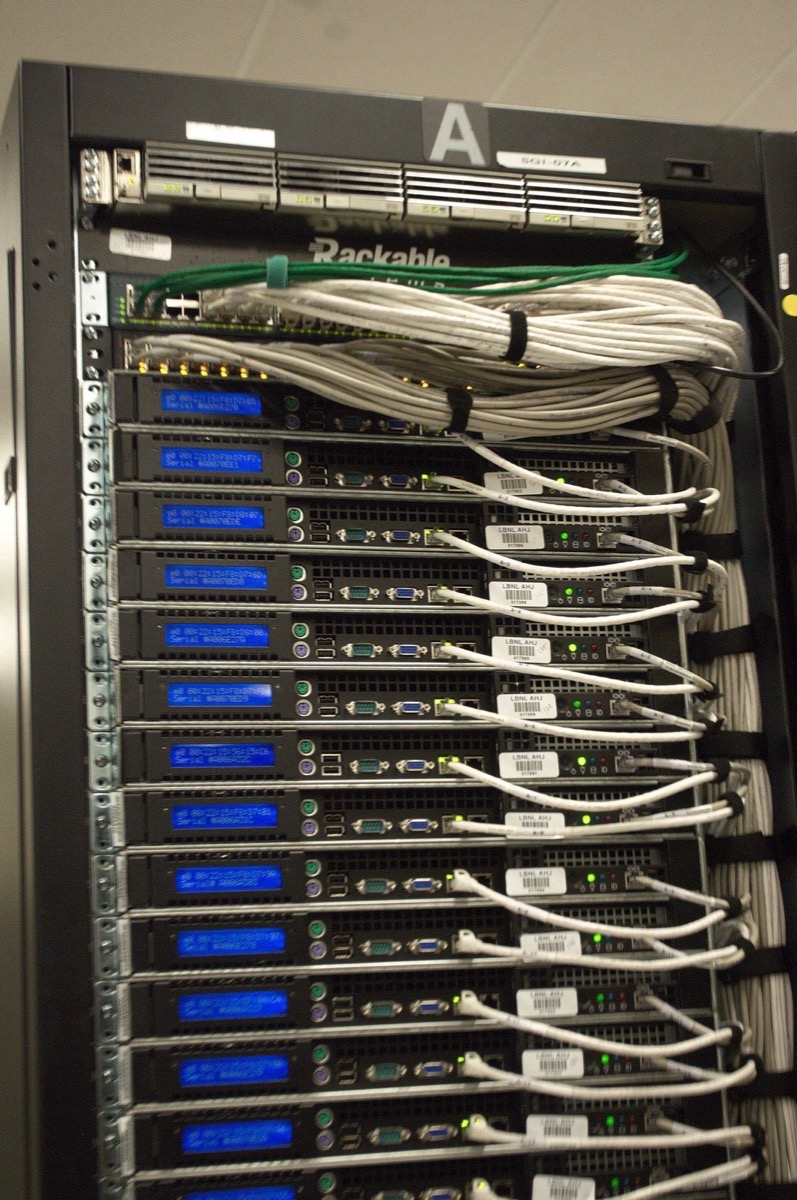
For the fastest traders, even a leased line across Mumbai is a bit too slow. Since 2010 NSE has offered co-location: a member can rent rack space inside the exchange's own data centre and put its servers a short cable away from the matching engine. That matters for firms whose strategies depend on reacting within microseconds, and it's how the most detailed market data is delivered, as section 7 shows. For a retail order from Kochi, a few milliseconds over a leased line is probably lost in the time it takes Meera's phone to reach Zerodha at all.
What happens when a line fails? Zerodha published a postmortem in April 2018 that walks through it. Its orders go to NSE through several CTCLs, used in round robin, each with a primary leased line and one backup. At about 12:12 pm on 12 April 2018 the primary line on one CTCL went down and the backup took over, as designed. Then the backup started flapping: going up and down, not once but many times over the next hour.
Under 0.3% of that day's orders and about 1.5% of the clients who traded were affected. Worst hit were bracket and cover orders, which place an exit order automatically after the entry: the exit legs were never placed, leaving positions customers couldn't close the usual way. About the lines themselves, the postmortem was blunt. Each CTCL is allowed only one backup line, and there was little more it could do about their reliability.
Meera's order went out over a healthy line, so it's now at NSE. It's time to look at what the exchange does with it.
04The order book
4.1A queue at every price
Section 2 ended with the requirement that every order for one stock goes into one list, in the order it arrived. Let's make that list precise, because it's the most important data structure in this chapter.
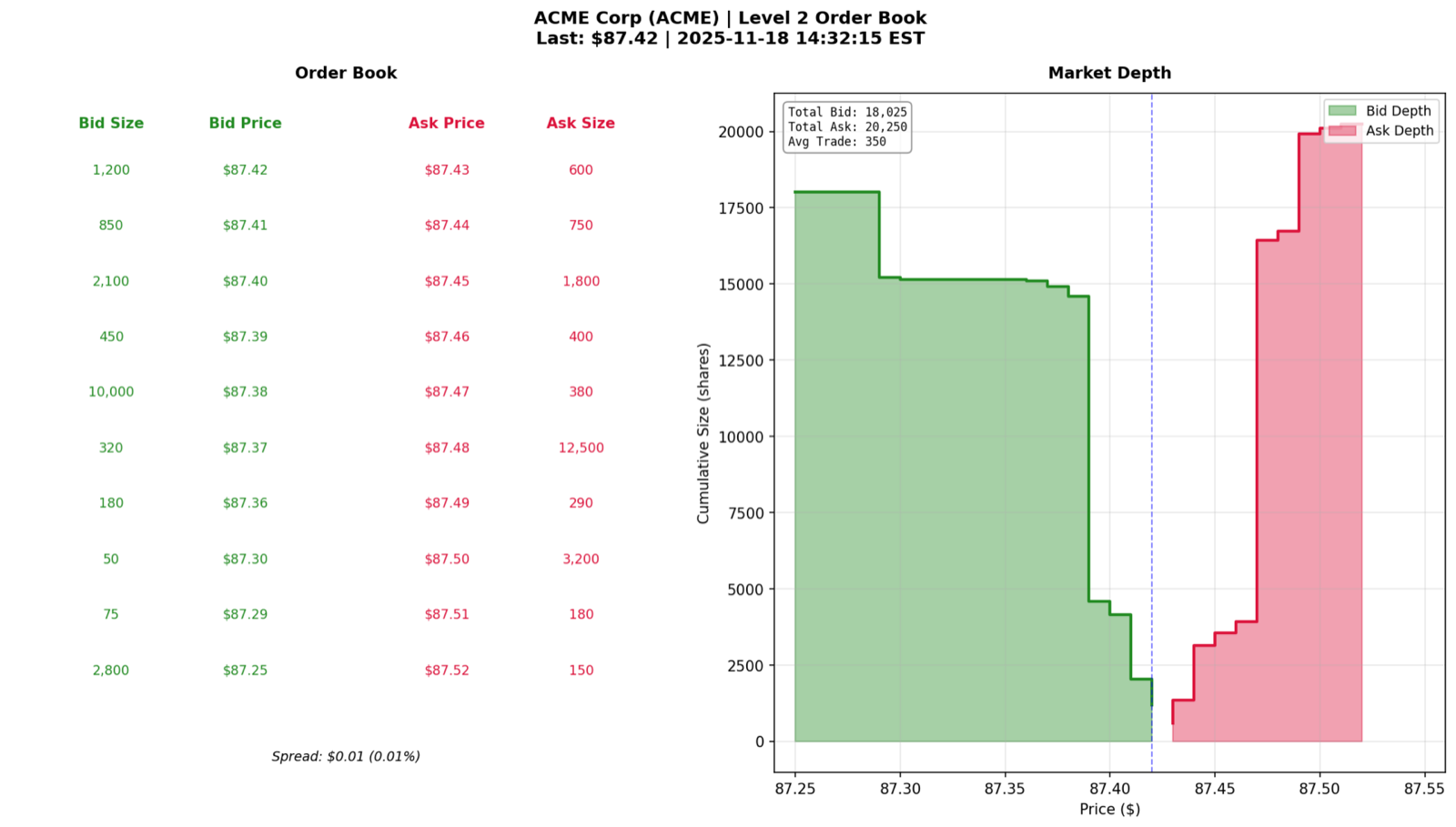
Start with what's waiting. A buy order that hasn't traded yet is called a bid: "I'll pay up to ₹1,499 for 8 shares." A waiting sell order is an ask (or offer): "I'll sell 4 shares for no less than ₹1,499.50." Collect all the bids and asks for one stock and you have its order book. The highest bid and the lowest ask are the best prices on each side, and the gap between them is the spread. If the best bid were ever at or above the best ask, those two orders would trade immediately, so in a resting book the bids are always below the asks.
NSE's rule for which order goes first is published, and it's the same rule almost every stock exchange uses. Its trading system page says orders are stored "in price-time priority": "Price priority means that if two orders are entered into the system, the order having the best price gets the higher priority. Time priority means if two orders having the same price are entered, the order that is entered first gets the higher priority."
So the book is organised as a list of price levels, and each level holds a first-in, first-out (FIFO) queue of the orders at that price. Here's Meera's stock at 9:15:00, just before her order arrives:
| Side | Price | Queue at this price (oldest first) |
|---|---|---|
| ask | ₹1,501.00 | s5: 30 |
| ask | ₹1,500.00 | s2: 5, s3: 10, s4: 5 |
| ask | ₹1,499.50 | s1: 4 |
| bid | ₹1,499.00 | b1: 8 |
| bid | ₹1,498.50 | b2: 12 |
The best ask is ₹1,499.50 and the best bid ₹1,499.00, so the spread is 50 paise. Three different sellers are waiting at ₹1,500, and s2 got there first.
4.2Matching Meera's order
Meera's order is a buy of 10 at up to ₹1,500. For a buy, the matching engine takes the best ask and asks one question: is its price within her limit? If so, trade as much as possible with the order at the front of that level's queue, and repeat until her order is filled or the next best ask is above her limit. Two more rules from NSE's page decide the details. An order "may match partially with another order resulting in multiple trades." And "orders are always matched at the passive order price", meaning the price of the order that was already waiting. NSE calls waiting orders passive and the incoming one active.
Notice what the rule achieves. Meera set a limit of ₹1,500 and paid less on part of her order, because the ₹1,499.50 seller was already waiting and passive orders set the price. And s2, s3 and s4 all offered ₹1,500, but s2 was served first and s4 not at all, purely because of the order they arrived in. Neither outcome depended on anyone's clock.
4.3Build one
All of this fits in a short program. This one keeps, for each side, a dictionary from price to a deque (a double-ended queue: Python's FIFO queue, with fast removal from the front). Prices are stored as whole numbers of paise, so ₹1,499.50 is 149950; integer prices avoid the rounding errors of floating point, and as section 7 shows, that's how real feeds carry them too. The submit method is the matching loop from the scene. A market order, one with no limit price that takes whatever the book offers, is a buy or sell with price=None; it never rests in the book.
from collections import deque
from dataclasses import dataclass

@dataclass
class Order:
    id: str
    side: str      # "B" buy or "S" sell
    qty: int
    price: int     # in paise; None for a market order

class Book:
    def __init__(self):
        self.levels = {"B": {}, "S": {}}   # price -> FIFO queue of resting orders
        self.trades = []

    def best(self, side):
        prices = self.levels[side]
        if not prices:
            return None
        return max(prices) if side == "B" else min(prices)   # a real engine keeps these sorted

    def submit(self, o):
        other = "S" if o.side == "B" else "B"
        while o.qty > 0:
            p = self.best(other)
            if p is None:
                break
            if o.price is not None:                      # a limit stops at its price
                if (o.side == "B" and p > o.price) or (o.side == "S" and p < o.price):
                    break
            queue = self.levels[other][p]
            rest = queue[0]                              # oldest order at the best price
            n = min(o.qty, rest.qty)
            self.trades.append((o.id, rest.id, n, p))    # trade at the resting price
            o.qty -= n
            rest.qty -= n
            if rest.qty == 0:
                queue.popleft()
                if not queue:
                    del self.levels[other][p]
        if o.qty > 0 and o.price is not None:            # what's left of a limit rests
            self.levels[o.side].setdefault(o.price, deque()).append(o)

    def show(self):
        for p in sorted(self.levels["S"], reverse=True):
            print(f"   ask {p/100:9.2f}  " + " ".join(f"{x.id}:{x.qty}" for x in self.levels["S"][p]))
        print("   " + "-" * 30)
        for p in sorted(self.levels["B"], reverse=True):
            print(f"   bid {p/100:9.2f}  " + " ".join(f"{x.id}:{x.qty}" for x in self.levels["B"][p]))

book = Book()
for o in [Order("s1", "S", 4, 149950), Order("s2", "S", 5, 150000),
          Order("s3", "S", 10, 150000), Order("s4", "S", 5, 150000),
          Order("s5", "S", 30, 150100), Order("b1", "B", 8, 149900),
          Order("b2", "B", 12, 149850)]:
    book.submit(o)
print("book at 09:15:00")
book.show()

book.submit(Order("meera", "B", 10, 150000))     # limit buy, 10 shares at ₹1,500.00
print("\nMeera's limit buy, 10 @ 1500.00")
for t in book.trades:
    print(f"   trade {t[0]} buys {t[2]:2} from {t[1]} at {t[3]/100:.2f}")
book.show()

book.trades.clear()
book.submit(Order("ravi", "S", 15, None))        # market sell, 15 shares
print("\nRavi's market sell, 15 shares")
for t in book.trades:
    print(f"   trade {t[1]} buys {t[2]:2} from {t[0]} at {t[3]/100:.2f}")
book.show()book at 09:15:00
ask 1501.00 s5:30
ask 1500.00 s2:5 s3:10 s4:5
ask 1499.50 s1:4
------------------------------
bid 1499.00 b1:8
bid 1498.50 b2:12
Meera's limit buy, 10 @ 1500.00
trade meera buys 4 from s1 at 1499.50
trade meera buys 5 from s2 at 1500.00
trade meera buys 1 from s3 at 1500.00
ask 1501.00 s5:30
ask 1500.00 s3:9 s4:5
------------------------------
bid 1499.00 b1:8
bid 1498.50 b2:12
Ravi's market sell, 15 shares
trade b1 buys 8 from ravi at 1499.00
trade b2 buys 7 from ravi at 1498.50
ask 1501.00 s5:30
ask 1500.00 s3:9 s4:5
------------------------------
bid 1498.50 b2:5Building the starting book is itself matching: the seven orders arrive one by one and none of them cross, so they all rest. Meera's three trades are exactly the ones in the scene, and s3 is left at the front of the ₹1,500 queue with 9 shares. Then Ravi sends a market sell for 15. It takes b1's 8 shares at ₹1,499 and then 7 of b2's at ₹1,498.50, a lower price, because a market order keeps walking down the book until it's filled. That's the danger of market orders when the book is thin, and it's why Kite Connect's order API has a market_protection setting that turns a market order into a limit a chosen percentage away from the current price.
4.4The data structure inside a real engine
This toy works, but look at what each operation costs. best() scans every price in a dictionary, which is fine for five levels and hopeless for thousands. A real engine needs four operations to be fast, and each one shapes the structure:
| Operation | How often | What makes it fast |
|---|---|---|
| Find the best bid or ask | Every incoming order | Keep the levels sorted, or keep a pointer to the best level |
| Add an order to the back of a level | Every order that rests | A linked list or queue per level, with a tail pointer |
| Remove from the front of a level | Every fill | The same queue's head pointer |
| Cancel an order from the middle of a queue | Constantly; most orders are cancelled, not filled | A hash map from order ID to its node in a doubly linked list, so it unlinks in constant time |
So the usual design is a sorted map from price to level (a balanced tree such as a red-black tree, or a skip list), where each level is a doubly linked list of orders, plus a hash map from order ID to the order's list node. Adding at a new price costs a logarithmic tree insert; everything at an existing price is constant time.
Exchanges have one advantage that general-purpose code doesn't: prices can't be just anything. They move in fixed steps called ticks (a few paise for most stocks), and NSE sets a price band around each stock's previous close outside which orders are rejected (for some stocks the band can widen during the day). So the number of possible prices in a day is bounded and known in advance, and an engine can replace the tree with a plain array indexed by price: slot i holds the level for the band's lowest price plus i ticks. Finding a level becomes a single array access, and the best price is tracked with an index that moves as levels empty and fill. NSE doesn't publish which structure its engine uses, so treat this as the design space, not a description.
How should a matching engine store the price levels of one book?
- Works for any price range
- Memory grows only with levels in use
- Logarithmic insert at a new price
- Pointer chasing is unfriendly to CPU caches
- Constant-time access to any level
- Contiguous memory suits the cache
- Needs a bounded price range
- Wastes memory when the band is wide and the book sparse
- Easy to write
- Removing an emptied level from the middle is slow
- No fast way to find a given price
Both of the first two are used in practice, and the choice depends on the market. Price bands, as NSE has, make the array practical; markets with unbounded prices, or crypto pairs with tiny ticks, lean on trees. A heap, probably the first structure most people reach for, is the weakest of the three, because order books need fast access to arbitrary prices, not only the top.
05Before 9:15: the opening auction
5.1Why not just start matching at 9:15?
Back in section 4, the book was already full of orders at 9:15:00, at prices close to each other. Where did they come from? Think about what the book looks like the moment trading starts after a night of news. Results came out overnight, a foreign market fell, and thousands of people placed orders in the last few minutes. If continuous matching started cold, the first sell order to arrive would trade against whatever bid happened to be waiting, perhaps a stale one far from where the market will settle, and the "opening price" would be an accident of who clicked first. A few small orders at strange prices would set the tone for the whole day.
So NSE doesn't start continuous trading cold. From 9:00 to 9:15 it runs a pre-open session, and in it a different kind of matching called a call auction: collect orders for a while without trading, then find the single price at which the most shares can change hands, and trade everything that can trade at that one price, all at once.
5.2Finding the equilibrium price
NSE calls the price the auction picks the equilibrium price. NSE's pre-open page defines it: "The equilibrium price is the price at which the maximum volume is executable." If several prices tie on volume, it picks the one with the smallest order imbalance, the unmatched quantity left over on one side. If that still ties, it picks the price closest to the previous day's close.
Here's how to compute it. At each candidate price p, the demand is the total quantity of buy orders willing to pay p or more, and the supply is the total of sell orders willing to accept p or less. The number of shares that can trade at p is the smaller of the two. As p rises, demand falls and supply grows, and the equilibrium is where they cross, the same picture as in an economics textbook.
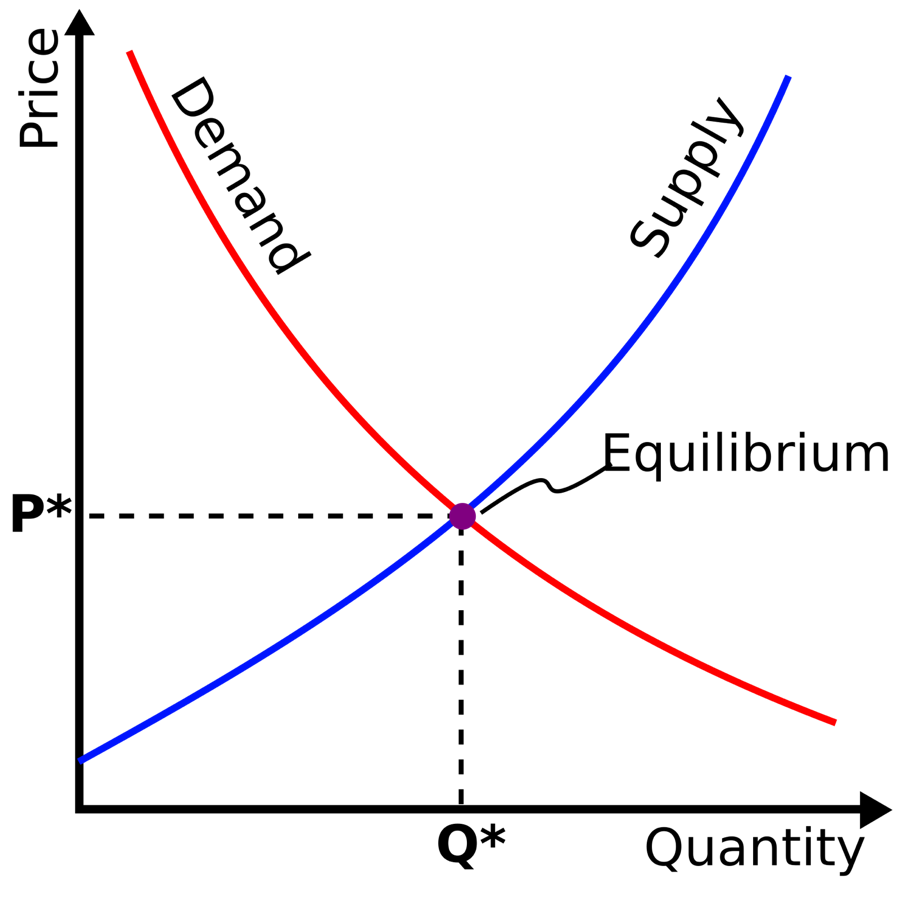
NSE's page includes a worked example, and this program reproduces it from the individual orders. It builds the demand and supply schedule, then picks the equilibrium with the three rules in order. Python's max with a tuple key does the tie-breaking: first the most tradable shares, then the smallest imbalance (negated, so smaller is better), then the smallest distance from yesterday's close. A second run adds one large late buyer to show what happens when the first two rules both tie.
# Orders collected in the pre-open window: (limit price in rupees, quantity)
# These reproduce the worked example on NSE's pre-open page.
buys  = [(103, 13500), (104, 9500), (105, 12000), (106, 6500), (107, 5000), (108, 4000)]
sells = [(103, 11500), (104, 9800), (105, 15000), (106, 12000), (107, 12500), (108, 8500)]
prev_close = 104.40

def equilibrium(buys, sells, prev_close):
    rows = []
    for p in sorted({price for price, _ in buys + sells}):
        demand = sum(q for price, q in buys if price >= p)   # buyers willing to pay p or more
        supply = sum(q for price, q in sells if price <= p)  # sellers willing to take p or less
        rows.append((p, demand, supply, min(demand, supply), abs(demand - supply)))
    print(" price  demand  supply  tradable  imbalance")
    for p, d, s, t, imb in rows:
        print(f"{p:6} {d:7,} {s:7,} {t:9,} {imb:10,}")
    # 1. most shares traded, 2. smallest imbalance, 3. closest to yesterday's close
    best = max(rows, key=lambda r: (r[3], -r[4], -abs(r[0] - prev_close)))
    return best[0], best[3]

price, qty = equilibrium(buys, sells, prev_close)
print(f"opening price {price}, {qty:,} shares trade at it")

print("\na late buyer adds 20,800 shares at 106")
price, qty = equilibrium(buys + [(106, 20800)], sells, prev_close)
print(f"opening price {price}, {qty:,} shares trade at it") price demand supply tradable imbalance
103 50,500 11,500 11,500 39,000
104 37,000 21,300 21,300 15,700
105 27,500 36,300 27,500 8,800
106 15,500 48,300 15,500 32,800
107 9,000 60,800 9,000 51,800
108 4,000 69,300 4,000 65,300
opening price 105, 27,500 shares trade at it
a late buyer adds 20,800 shares at 106
price demand supply tradable imbalance
103 71,300 11,500 11,500 59,800
104 57,800 21,300 21,300 36,500
105 48,300 36,300 36,300 12,000
106 36,300 48,300 36,300 12,000
107 9,000 60,800 9,000 51,800
108 4,000 69,300 4,000 65,300
opening price 105, 36,300 shares trade at itNSE's published example matches the first table line for line: demand falls from 50,500 to 4,000 as the price rises, supply climbs, and the most shares, 27,500, can trade at ₹105. That's the opening price. In the second run, the big buyer at ₹106 makes ₹105 and ₹106 tie at 36,300 shares, and they tie on imbalance too, 12,000 each. The third rule breaks it: ₹105 is closer to the previous close of ₹104.40.
Everyone who trades in the auction gets the same price, however early or high they bid, so there's no race to be first. Within the auction NSE's page sets the matching order: market orders first, in time priority, then market orders against limit orders, then limit against limit, both in price-time priority. Orders that don't trade aren't thrown away. They move into the normal continuous book "retaining the original time stamp", which is why Meera's stock had a full book at 9:15:00, and why her order, arriving at 9:15:00, joined each queue behind orders placed at 9:01.
5.3The random close
One more detail shows how much thought goes into fairness. If order entry closed at a known moment, a trader could wait until the last instant, watch the indicative price that the exchange publishes during the session, and place an order designed to move it. So the end of order entry is random. Until September 2026, order entry closed at a random moment between the seventh and eighth minute. From 7 September 2026, NSE's revised session runs like this:
| Time | What happens |
|---|---|
| 9:00 to 9:05 | Enter, change and cancel both limit and market orders |
| 9:05 to about 9:10 | Limit orders only; entry closes at a random moment in the last two minutes |
| about 9:10 to 9:12 | Equilibrium price computed; orders matched and trades confirmed |
| 9:12 to 9:15 | Buffer: the book moves over to continuous trading |
| 9:15 | Continuous matching by price-time priority begins |
During the session, NSE publishes the indicative equilibrium price, the quantity that would trade at it, and the imbalance, updated as orders arrive. That's the price Meera was watching from 9:00.
06One thread per book
6.1Two threads, one book
We now know what the matching engine computes. Next comes the question of running it on real hardware at millions of messages a second, and the obvious move is parallelism: give the engine many threads and let them process orders concurrently. Let's see what happens when two threads touch the same book.
At the same instant, the engine receives a market buy for 9 shares and a cancel of s3's remaining 9 shares at ₹1,500. Thread A handles the buy and thread B the cancel. Which outcome is correct?
If the two threads run in parallel, they need a lock on the book, and with a lock only one of them runs at a time anyway, plus the cost of taking and handing over the lock. That's version 1's problem again, moved from the database into memory. Worse, which thread wins the lock depends on timing inside the machine, so the result of the same two messages could differ from run to run.
Exchanges give up parallelism within a book and keep it between books instead. One thread owns each book (or each group of books) and processes its messages one at a time, in a fixed order. There's no lock, because nobody else touches that book. Different stocks have nothing to do with each other, so thousands of books run on many cores and machines side by side: the work is partitioned by instrument, exactly as chapter 29 partitions data by key.
6.2The sequencer and the journal
One thread per book settles the order inside the engine. Something has to decide the order in which messages reach it, and make that order permanent. That job belongs to the sequencer: a component in front of the engine that gives every incoming message the next number in a strictly increasing sequence. Once a message has a sequence number, its place in history is fixed.
Before the engine acts on a message, the sequenced message is written to a journal, an append-only log on durable storage, and copied to standby machines. Meanwhile the engine keeps the book entirely in memory. That's enough to recover from anything, because of one property of the matching logic: it's deterministic. Given the same starting book and the same messages in the same order, it always produces the same trades and the same final book. There's no randomness, no reading of the clock inside the logic, and no dependence on thread timing. So:
- After a crash, a new engine starts from a recent snapshot of the book and replays the journal from that point. It arrives at exactly the state the old one had.
- A standby engine reads the same sequenced messages and processes them in step. If the primary dies, the standby already holds the same book and can take over almost at once.
- Auditing a disputed trade means replaying the journal to that moment and watching it happen again.
How much of this NSE does is partly public. A 2019 SEBI order, in a case about NSE's market data, describes the flow from the exchange's own documents: orders go from a "Communication Gateway to the Matching Engine (which matches data based on price–time priority)", then to the trading system's post-trade stage, and on to the data centres that publish market data, with every tick carrying "a uniquely identified 'tick sequence number'". NSE's technology pages say it uses in-memory databases in its trading layers for low latency. The internal threading model, journalling and failover of NSE's engine aren't published, so the diagram above shows what a design needs, not NSE's actual boxes.
6.3How fast can one thread go?
A single thread sounds like a bottleneck. Probably the best-known public answer to "how fast can it go?" comes from LMAX, a London trading venue, whose architecture Martin Fowler described in 2011. LMAX's core, which Fowler called the Business Logic Processor, ran on one thread, entirely in memory, with no database. Fowler's article reports that it could handle 6 million orders a second on that single thread.
Around it sits the design from 6.2. Input messages land in a large ring buffer (LMAX's open-source library for this is called the Disruptor). Before the business logic sees a message, separate consumers of the same buffer write it to a journal on disk, send it to replica machines, and decode it from wire format. The business logic is deterministic, so its state can always be rebuilt by replaying the journal; LMAX took a snapshot nightly and could restart in under a minute by loading it and replaying the day's input. Fowler records that an earlier, more conventional prototype with explicit concurrency spent "more time managing queues than doing the real logic of the application."
Why is one thread so fast? Because everything it touches is in memory and in the CPU's caches, it never waits for a disk or a lock, and it never pays to hand data between cores. Fowler calls the mindset, borrowing Martin Thompson's term, mechanical sympathy: knowing how the hardware behaves and writing code that goes with it.
How should the engine use the machine's cores?
- Feels like it uses all the cores
- Orders for a busy book serialise on its lock anyway
- Result can depend on thread timing
- Hard to replay or replicate exactly
- No locks; cache-friendly
- Deterministic: replay and replicas give identical state
- Fairness comes from the sequence, not clocks
- One very busy instrument is limited to one core
- Anything slow in the thread stalls the whole book
Determinism is the deciding property. A matching engine has to produce the same answer on the primary, the standby and the replay, because those are its recovery and its audit trail. A single thread consuming a sequenced log gives that for free. In exchange, the thread must never block: no disk writes, no garbage-collection pauses, no network calls inside the loop. Chapter 16's lesson about tail latency applies at its most extreme here, since one 50-millisecond pause holds up every order for that stock.
07Getting prices out to a million screens
7.1Two feeds from the exchange
Meera's trades changed the book: s1 is gone, s2 is gone, s3 shrank, and the last traded price is ₹1,500. Everyone watching the stock needs to know, at the same moment. Section 1's estimate already showed that this outbound flow is the bigger job, so let's follow it.
NSE's two price feeds are described in the same 2019 SEBI order. One is a limited-depth broadcast, a summary of each stock's best few price levels and last trade, sent as a UDP stream and available over VSAT satellite links and leased lines. The other is tick-by-tick (TBT), which "reflects every change in the order book": every new order, change, cancellation and trade. TBT is so large that NSE offers it only inside co-location.
7.2One by one is unfair: multicast
How you deliver a feed to many receivers turns out to be a fairness question. From 2010, NSE delivered TBT over TCP. TCP is a connection between exactly two machines, so sending the same tick to a hundred members means sending it a hundred times, one after another. In the SEBI order's words, TBT "was earlier disseminated over TCP/IP wherein the information is delivered one-by-one."
One by one means somebody is always first. SEBI found that a member who logged in first to the first port of the server that connected first to NSE's data centre "would be disseminated data ahead of other TMs in the same Port throughout the day", and that the port with the shortest queue had an advantage over the rest. NSE's setup lacked a load balancer and a randomiser that might have evened this out, and SEBI held that NSE hadn't exercised due diligence in setting it up. In its April 2019 orders SEBI directed NSE to pay ₹624.89 crore plus interest. On appeal in January 2023 the Securities Appellate Tribunal set that aside and ordered ₹100 crore instead, and in 2026 NSE settled the co-location and related cases with SEBI, after which the Supreme Court closed SEBI's appeals in September 2026.
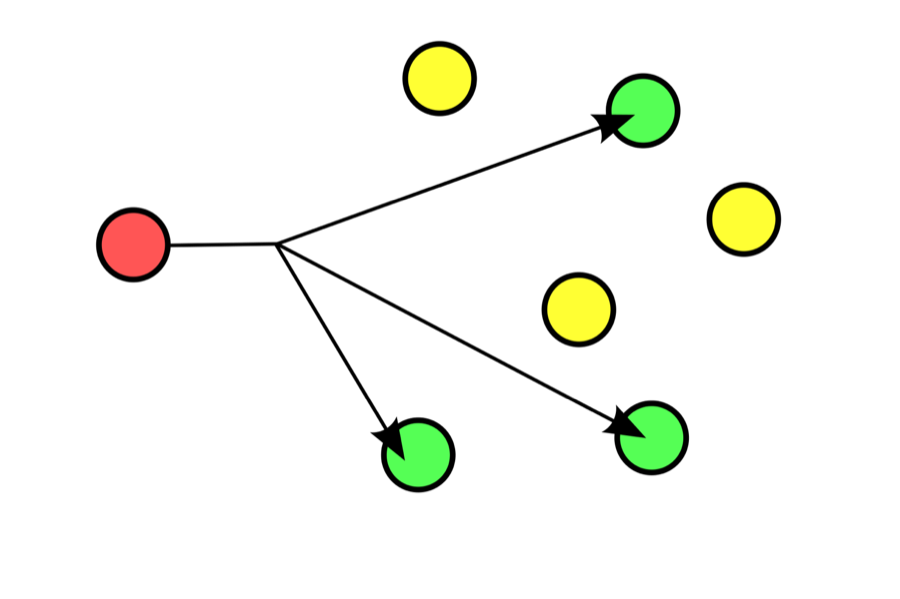
The fix is multicast: the sender transmits each packet once, to a group address, and the network switches copy it to every receiver that has joined the group (chapter 10 covers how the kernel joins a group). NSE introduced multicast TBT in April 2014 for derivatives and in November 2014 for the cash market. Multicast runs over UDP, which means packets can be lost and nobody resends them automatically. So every packet carries a sequence number, the receiver checks that each number is one more than the last, and if a number is missing it asks a separate recovery service for the gap. That's the same sequence number the exchange's sequencer assigned in section 6, now doing a second job.
7.3Zerodha's ticker
Zerodha receives the exchange feed in its racks where the leased lines land, and has to send it on to more than a million phones and browsers. Phones can't join a multicast group across the internet, so this last step is a fan-out: one incoming stream, copied to every connected client that cares about each instrument.
Kite's prices travel over a WebSocket, a long-lived, two-way connection that starts as an HTTP request and then stays open, so the server can push updates the moment they happen. At the other end sits Zerodha's ticker. Zerodha's 2020 post describes it as "a single binary program" in Go that "serves hundreds of thousands of concurrent WebSocket connections broadcasting millions of market quotes every second." The 2021 post adds its history: rewritten at least five times in six years, with the messaging underneath it moving from a custom TCP protocol to ZeroMQ, then nanomsg, then NATS, a lightweight publish-subscribe system.
What a fan-out server must handle is clear even where Zerodha's internals aren't published. Each connection subscribes to specific instruments, so the ticker keeps a map from instrument to the set of connections watching it, and each incoming quote touches only those. Some phones are on bad mobile networks and can't keep up; a server that queued every update for them would run out of memory, so a sane design keeps only the latest quote per instrument for a slow client and drops the ones it has been overtaken by, since a price that's been replaced is worthless. How Zerodha's ticker handles slow clients isn't documented.
7.4The packet format
Zerodha documents the ticker's wire format in the Kite Connect docs, because developers connect to the same service. It's a compact binary format, and it's our second data structure. Clients choose one of three modes per instrument, which decides how much they receive:
| Mode | What's in it | Bytes per packet |
|---|---|---|
ltp | Instrument token and last traded price | 8 |
quote | Adds last quantity, average price, volume, total buy and sell quantity, open, high, low, close | 44 |
full | Adds timestamps, open interest, and five levels of market depth on each side | 184 |
A WebSocket message can carry many packets. Its first two bytes are the number of packets; then each packet is preceded by two bytes giving its length. Every field is a 4-byte integer, and prices are in paise, so a client divides by 100 for rupees, the same integer trick as the TryIt in section 4. The full packet's depth section, bytes 64 to 184, is ten 12-byte entries, five bids then five asks, each a quantity (4 bytes), a price (4 bytes), a count of orders (2 bytes) and 2 bytes of padding. Even the instrument token carries information: its lowest byte says which exchange segment the instrument belongs to, 1 for NSE equities. Zerodha's official clients read every field as big-endian, the network byte order.
This program packs the book just after Meera's trades into a full packet, sends it alongside an 8-byte ltp packet for another stock in one frame, and decodes it the way a client would. struct.pack(">16i", ...) writes sixteen big-endian 4-byte integers; ">iih2x" is one depth entry: two integers, a 2-byte short and two padding bytes.
import json, struct

# --- the server side: pack one "full" quote, 184 bytes, prices in paise ---
# (the book just after Meera's order in the first experiment, plus deeper levels)
token = 1234433                     # illustrative; the low byte, 1, means an NSE equity
quote = [token, 150000, 1, 149987, 231_450, 61_200, 58_900,   # ltp, ltq, avg, volume, buy qty, sell qty
         149800, 150300, 149500, 149620,                        # open, high, low, close
         1791776700, 0, 0, 0, 1791776700]                       # last trade time, OI x3, exchange time
bids = [(8, 149900, 1), (12, 149850, 1), (40, 149800, 5), (25, 149750, 3), (60, 149700, 7)]
asks = [(14, 150000, 2), (30, 150100, 1), (18, 150150, 1), (75, 150200, 6), (40, 150250, 3)]
full = struct.pack(">16i", *quote)
for qty, price, orders in bids + asks:
    full += struct.pack(">iih2x", qty, price, orders)           # 12 bytes per depth entry

ltp = struct.pack(">ii", 7654145, 224510)                       # an 8-byte "ltp" packet
message = struct.pack(">h", 2)                                  # how many packets follow
for pkt in (ltp, full):
    message += struct.pack(">h", len(pkt)) + pkt
print(f"one WebSocket frame: {len(message)} bytes, packets of {len(ltp)} and {len(full)} bytes")

# --- the client side: walk the frame and decode by packet length ---
n, = struct.unpack_from(">h", message, 0)
off = 2
for _ in range(n):
    size, = struct.unpack_from(">h", message, off); off += 2
    pkt = message[off:off + size]; off += size
    tok, last = struct.unpack_from(">ii", pkt, 0)
    print(f"\ntoken {tok} (segment {tok & 0xff}): {size}-byte packet, last price ₹{last / 100:,.2f}")
    if size == 184:
        f = struct.unpack_from(">16i", pkt, 0)
        print(f"  volume {f[4]:,}  open {f[7]/100:.2f}  high {f[8]/100:.2f}  low {f[9]/100:.2f}")
        for i in range(5):
            bq, bp, bo = struct.unpack_from(">iih", pkt, 64 + 12 * i)
            aq, ap, ao = struct.unpack_from(">iih", pkt, 124 + 12 * i)
            print(f"  bid {bq:3} @ {bp/100:8.2f} ({bo})    ask {aq:3} @ {ap/100:8.2f} ({ao})")

as_json = json.dumps({"instrument_token": token, "last_price": 1500.0, "last_quantity": 1,
    "average_price": 1499.87, "volume": 231450, "buy_quantity": 61200, "sell_quantity": 58900,
    "ohlc": {"open": 1498.0, "high": 1503.0, "low": 1495.0, "close": 1496.2},
    "depth": {"buy": [{"quantity": q, "price": p / 100, "orders": o} for q, p, o in bids],
              "sell": [{"quantity": q, "price": p / 100, "orders": o} for q, p, o in asks]}})
print(f"\nthe same quote as JSON: {len(as_json)} bytes")one WebSocket frame: 198 bytes, packets of 8 and 184 bytes
token 7654145 (segment 1): 8-byte packet, last price ₹2,245.10
token 1234433 (segment 1): 184-byte packet, last price ₹1,500.00
volume 231,450 open 1498.00 high 1503.00 low 1495.00
bid 8 @ 1499.00 (1) ask 14 @ 1500.00 (2)
bid 12 @ 1498.50 (1) ask 30 @ 1501.00 (1)
bid 40 @ 1498.00 (5) ask 18 @ 1501.50 (1)
bid 25 @ 1497.50 (3) ask 75 @ 1502.00 (6)
bid 60 @ 1497.00 (7) ask 40 @ 1502.50 (3)
the same quote as JSON: 745 bytesThis frame is 198 bytes: 2 for the count, then 2 + 8 for the first packet and 2 + 184 for the second. A client doesn't need a field telling it which mode each packet is in; the length says so, 8, 44 or 184. At the top of the depth is the book from section 4 after Meera's order: 14 shares at ₹1,500 from two orders (s3's 9 and s4's 5), 30 at ₹1,501 from s5, and b1 and b2 on the bid side. As JSON, with the fields a client would need, the same quote comes to 745 bytes, roughly four times larger.
Four times matters at this scale. Section 1's estimate of 20 million quote packets a second was roughly 7 gigabits a second in binary. In JSON, with depth, it would be several times that, and every byte also costs CPU time to encode on the server and to parse on a cheap phone. Binary fields at fixed offsets can be read without parsing at all.
What format should a quote feed to millions of clients use?
- Readable, easy to debug
- Every language parses it
- Several times larger
- Costs CPU to encode and parse on every update
- Small: 8, 44 or 184 bytes
- No parsing: read fields at fixed offsets
- Integer paise avoid rounding errors
- Needs documentation and client libraries
- Changing the layout breaks old clients
Kite uses binary for market data and JSON text messages, on the same WebSocket, for the rarer things: order updates, errors and broker messages. That split follows the traffic. Prices are millions of tiny, frequent updates where size dominates; order updates are few and benefit from being readable and extensible.
089:15:00: bursts, rate limits and throttles
8.1When everyone arrives at once
We've followed one order and one price update. Now multiply by everyone at 9:15. Zerodha's 2020 description of a 10x burst within 10 seconds means that a system comfortably sized for the average minute is badly undersized for the first ten seconds of the day, and that burst is when the most money is at stake.
Zerodha's 2 May 2018 bulletin is a good lesson in how a burst turns a small fault into a big one. From 9:03 that morning, clients had severe trouble logging in to Kite on web and mobile, and it took almost two hours to fix. Its cause was leased lines between Zerodha's own Mumbai data centres, suspected to have been damaged by Metro construction, which were flapping. Login depended on a call across those lines. Then the burst made it worse: because it happened at market open, over 3.5 lakh (350,000) clients kept retrying, building up a huge queue of login requests over the already failing lines. Users already logged in, and those on desktop applications, were mostly unaffected. The fix Zerodha announced was structural: "completely remove such over-the-network dependencies" between data centres for login, and rebuild the login system, replacing security questions with a PIN.
8.2Rate limits, at every layer
Handling a burst also means refusing work the system can't do. Every layer of this design limits how fast each client may send, and the limits are published.
Kite Connect's documentation, for programs that trade through Zerodha's API:
| Limit | Value |
|---|---|
| Order placement | 10 requests a second |
| Orders per minute | 400 |
| Orders per day, per user or API key | 5,000 |
| Modifications of one order | 25, then cancel and place a new one |
| Quote requests | 1 a second |
| Historical data | 3 requests a second |
| WebSocket instruments per connection | 3,000 |
| WebSocket connections per API key | 3 |
SEBI, the regulator, sets a limit too. Under SEBI's February 2025 circular on algorithmic trading by retail investors, and NSE's May 2025 implementation standards, a client's program that sends more than 10 orders a second to an exchange has to be registered with the exchange as an algorithm; below that it needn't be. The exchange, in turn, caps how many messages each member connection may send per second, so one broker's runaway program can't flood the sequencer that everyone shares.
?Why limit per client instead of just adding capacity?
Because the bottleneck at the exchange can't be scaled out. Each book is one thread consuming one sequenced stream, by design, so a single client sending ten thousand messages a second for one stock would delay every other participant's orders in that stock. A per-client limit, usually a token bucket (each client earns tokens at a fixed rate up to a small maximum, and each message spends one), keeps any one sender from taking more than its share while still allowing short bursts. Rate limits are also how the broker protects its own systems and customers: Kite's 10 orders a second sits right at the regulator's algo threshold, and the 25-modification limit stops a program from rewriting one order thousands of times.
Kite's ticker allows 3,000 instruments per WebSocket connection and 3 connections per API key. Why would a broker cap subscriptions this way, when sending more data costs it only bandwidth?
09When the exchange stops: 24 February 2021
9.1What happened
Everything so far assumed the exchange keeps running. On 24 February 2021, NSE stopped. SEBI's press release of 25 February and NSE's own statement give this account:
| Time (24 Feb 2021) | What happened |
|---|---|
| about 10:08 | Prices on NSE stopped updating, as reported at the time |
| about 11:30 | NSE told SEBI it had told the market that trading would halt from 11:40, due to "issues with the links with telecom service providers" |
| 11:40 | Trading halted (derivatives at 11:40, cash market at 11:43, as reported) |
| 15:17 | NSE told members trading would resume from 15:30 |
| 15:30 to 17:00 | Trading resumed, with market hours at NSE, BSE and MSEI extended to 5 pm |
NSE's statement explained the cause. It had multiple telecom links with two different providers, for redundancy, and both providers reported that all of their links were unstable. That instability hit the online risk management system of NSE Clearing, NSE's clearing subsidiary, which was set up in a high-availability configuration. NSE said the trading system itself was not affected. But without the risk system, NSE said, the market couldn't function normally, so trading had to be shut down.
9.2Why a broken risk system stops a working exchange
Pause on this for a moment, because the matching engine was fine. Why stop it? Remember section 3: the broker checks Meera's margin before her order leaves Zerodha. The clearing corporation runs the same kind of check one level up, on each broker's positions across all its clients, in real time during the day, because the clearing corporation guarantees every trade and needs to know at every moment that no member has run up more risk than its collateral covers. If that system can't see positions, nothing stops a member from building a position it can't pay for, and the guarantee behind every trade on the exchange has a hole in it.
So the exchange chose to fail closed: when the safety check is unavailable, stop the action it protects, instead of carrying on without it. For a trading system that's the right default. A halted market is painful and visible; a market running without risk controls can fail in ways that cost far more and are discovered only later.
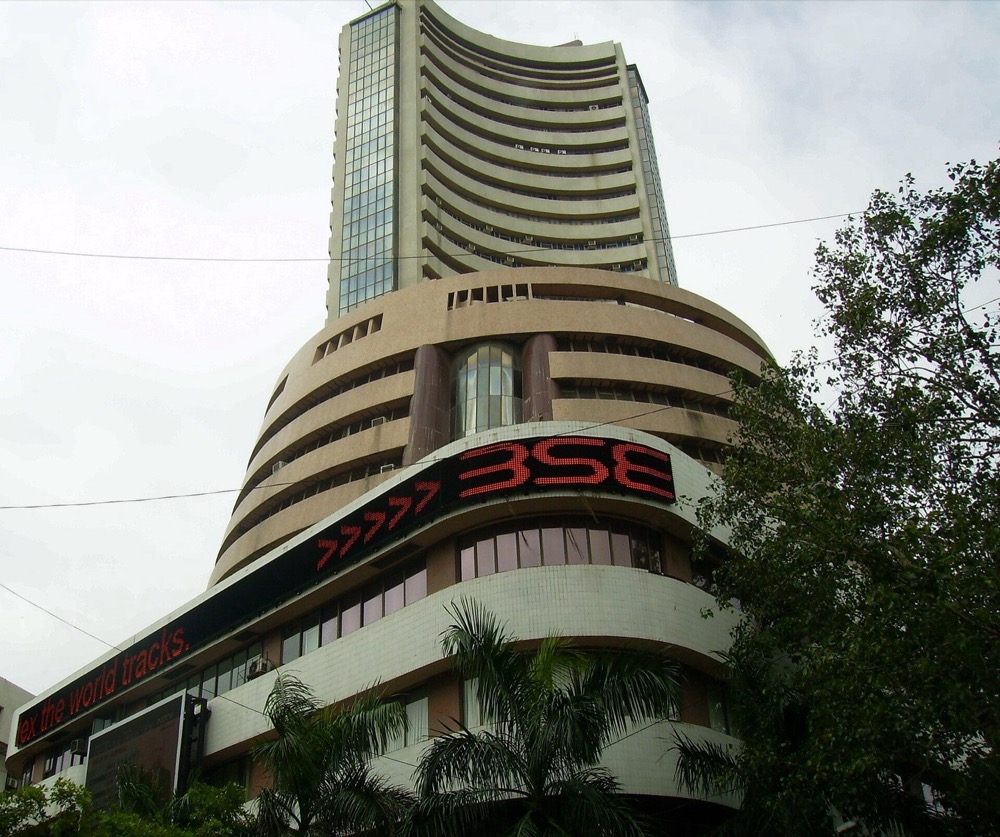
9.3The questions afterwards
SEBI's press release asked NSE two things: a detailed root cause analysis, and an explanation of "the reasons for trading not migrating to the disaster recovery site." That second question is the design question. SEBI's rules already required exchanges to run live trading from their disaster recovery site for two consecutive days every six months and to hold quarterly drills, so the site existed and was meant to be exercised regularly. Yet the halt lasted roughly four hours instead of a failover of minutes. In June 2023 NSE and NSE Clearing settled the proceedings with SEBI, paying ₹49.76 crore and ₹22.88 crore respectively, as reported at the time, without admitting or denying the findings.
SEBI's release also pointed out what limited the damage. Under SEBI's interoperability framework, the clearing corporations of India's exchanges settle with each other, so a participant can trade on one exchange and square off on another. So traders with open positions in stocks could close them on BSE, and they did: BSE's turnover jumped nearly eightfold that day.
10After the trade: clearing and T+1
10.1From a trade to shares in Meera's account
Meera's order said Complete at 9:15, but at that moment she owns a promise, not shares. Three trades were matched, with three different sellers, possibly at three different brokers. Turning them into shares in her account and money in theirs is a separate system, and we'll only sketch it.
The trades go from the exchange to its clearing corporation, NSE Clearing. It becomes the buyer to every seller and the seller to every buyer, a role called central counterparty, so Meera's broker owes money to the clearing corporation and not to three strangers, and if one seller's broker fails, the clearing corporation still delivers. It nets each broker's trades for the day down to one obligation per stock, collects money and shares, and passes them on.
How long that takes is the settlement cycle, written T+n: trade day plus n business days. SEBI's circular of September 2021 let exchanges move stocks from T+2 to T+1. Exchanges started with the smallest 100 stocks on 25 February 2022, continued in monthly batches, and finished on 27 January 2023, when India became one of the first major markets on T+1 for all stocks. So Meera's shares arrive in her demat account, the electronic account at a depository that holds her securities, the next business day.
Settlement runs on batch systems and end-of-day files, nothing like the microsecond world of the matching engine, and that's fine, because it has a whole day to do its work. Zerodha's 2021 post says it schedules such end-of-day jobs with slack precisely because corporate actions, such as stock splits and dividends, "regularly break systems."
11The whole system
11.1Every box, and why it's there
| Component | What it does | Added because |
|---|---|---|
| OMS and RMS | Track orders; check and block margin before sending | The broker is liable for every order; one balance can't be spent twice (§2.3, §3) |
| Exchange gateways | CTCL connections over leased lines, several in rotation | Exchanges accept only members' certified links; lines fail and flap (§3.4) |
| Order book | Price levels, each a FIFO queue | Price-time priority must be applied exactly (§4) |
| Pre-open auction | One equilibrium price for the opening | Continuous matching at open makes prices an accident of timing (§5) |
| Sequencer and journal | Number every message; log before acting | Fairness can't depend on clocks; recovery needs replay (§2.2, §6) |
| One thread per book | Deterministic matching, no locks | Locks serialise anyway; replicas and replay must agree (§6) |
| Multicast feed | Every change, sent once to all | One-by-one delivery made someone first (§7.2) |
| Ticker | Fans quotes out over WebSockets in a binary format | A million clients, tens of millions of packets a second (§1.2, §7) |
| Rate limits | Per-client caps at broker, regulator and exchange | The busiest point can't scale out; bursts at 9:15 (§8) |
| Clearing corporation | Real-time risk; guarantees and settles trades | Strangers must be able to trade safely; it can halt the market if it fails (§9, §10) |
11.2From top to bottom
| Level | The choice | Data structure or algorithm |
|---|---|---|
| System | Broker checks money; exchange decides order | Two organisations, each with its own risk check |
| Broker risk | One owner per account, in memory | Per-account serial queue; atomic check-and-block |
| Exchange input | One place decides who is first | Sequencer: strictly increasing numbers; append-only journal |
| Matching | One thread per book, deterministic | Price levels (tree or tick-indexed array) of FIFO doubly linked lists, plus an order-ID hash map |
| Opening | Call auction | Cumulative demand and supply schedule; max volume, min imbalance, nearest to previous close |
| Recovery | Replay, standby in lockstep | Snapshot plus journal replay; state machine replication |
| Exchange data | Send once, to everyone | UDP multicast with sequence numbers and gap recovery |
| Broker data | Fan out to subscribers | Instrument → connections map; 8/44/184-byte big-endian packets, prices in paise |
| Overload | Bound each client | Token buckets; exponential back-off with jitter |
12What goes wrong, and what it cost
12.1Failures this design has to survive
| What happens | What the user sees | What the design does |
|---|---|---|
| Meera taps Buy twice | Second order rejected for insufficient margin | The RMS checks and blocks in one step per account |
| A leased line to the exchange fails | Nothing | Orders move to another CTCL's line |
| A line flaps instead of failing (April 2018) | Orders stuck in open pending | Take the link out of rotation; reconcile orders against the exchange |
| Login depends on a flapping inter-DC link at open (May 2018) | Can't log in for two hours | Remove the cross-DC dependency; back off retries |
| A matching engine host dies | A brief pause | The standby, fed the same sequenced input, already has the same books |
| UDP market data packet lost | A quote missing for a moment | The sequence gap is detected and fetched from a recovery service |
| A slow phone can't keep up | Prices skip ahead | Keep only the latest quote per instrument for that client |
| The clearing corporation's risk system loses its links (Feb 2021) | Market halted for about four hours | Fail closed; traders close positions on another exchange |
12.2The tradeoffs, in one table
| Decision | Chosen | Given up | Why it was worth it |
|---|---|---|---|
| Pre-trade margin | In memory, one owner per account | Simplicity of one database transaction | Microsecond checks during the 9:15 burst |
| OMS | Bought a certified engine (Zerodha) | Control over the core | A 30-person team could build everything else |
| Who is first | A sequencer's number | Parallel intake | Fairness without trusting clocks |
| Matching | One thread per book | Using many cores for one hot stock | Determinism: replay, replicas and audit agree exactly |
| Opening | Call auction | Trading from 9:00 | One fair price after overnight news |
| Feed delivery | Multicast (since 2014) | TCP's built-in retransmission | Nobody is served first |
| Broker feed | Binary packets | Readability | About a quarter of the bytes of JSON |
| Risk system down | Halt the market | Four hours of trading | No trading without the guarantee behind it |
13Summary
- Two organisations share the work: the broker checks Meera's money and carries her order; the exchange decides its place in line and matches it.
- The broker's risk check must be atomic and fast: check and block margin in one step per account, before the order leaves, during a burst that can be 10x in 10 seconds.
- Brokers reach the exchange over certified links on leased lines, and a flapping line is worse than a dead one because failover never fires.
- An order book is price levels of FIFO queues, and price-time priority means best price first, then first arrival, with trades at the waiting order's price.
- A real book needs fast best-price, append, pop and cancel, which means sorted levels or a tick-indexed array, linked lists, and a map from order ID to node.
- The opening price comes from a call auction: the price with the most tradable volume, then the smallest imbalance, then nearest the previous close, with a random close to stop timing games.
- Fairness comes from a sequencer, not clocks: every message gets a number, is journalled, and is processed in that order.
- One deterministic thread per book removes locks and makes replay, standby replicas and audits produce identical results; LMAX showed one thread can handle millions of orders a second.
- Market data must reach everyone at once: NSE's one-by-one TCP feed favoured whoever connected first, and multicast with sequence numbers, introduced in 2014, fixed that.
- Zerodha's ticker fans out tens of millions of packets a second in an 8, 44 or 184-byte binary format with prices in paise.
- Rate limits at every layer protect a bottleneck that can't scale out, and an exchange whose risk system fails should fail closed, as NSE did on 24 February 2021.
14Build this
A tiny exchange with a sequencer and replay.
- Extend the matching program from section 4.3 so that every incoming message (new order, cancel, modify) first gets a sequence number and is appended to a journal file as one JSON line, before the book changes.
- Add cancel by order ID in constant time: keep a dictionary from ID to the order, and store each level as a doubly linked list instead of a
deque. - Generate 100,000 random orders and cancels around a price, run them, and print a hash of the final book and the list of trades.
- Delete the in-memory book, replay the journal from the start, and check the hash and trades are identical. Then take a snapshot halfway, and replay only from there.
- Run the same messages through two threads with a lock and a random sleep, and watch the hash change between runs. That's the bug a sequencer prevents.
- Add the pre-open auction from section 5.2 in front: collect orders for a fixed number of messages, compute the equilibrium, trade, and move the rest into the continuous book with their original sequence numbers.
15Interview questions
beginnerWhat is price-time priority?›
It's the rule that decides which waiting order trades first. Orders at a better price go first: for buyers the highest price, for sellers the lowest. Among orders at the same price, the one that arrived first goes first. NSE publishes this rule for its trading system, and trades happen at the price of the order that was already waiting. In practice the book is a set of price levels, each with a first-in, first-out queue.
beginnerWhat's the difference between a limit order and a market order?›
A limit order states the worst price you'll accept, such as "buy 10 at no more than ₹1,500"; whatever doesn't trade immediately waits in the book. A market order has no price and trades against whatever the book offers until it's filled, walking to worse prices if the best level runs out. That's why brokers offer market protection, which turns a market order into a limit some percentage away from the current price.
intermediateWhy is a matching engine usually single-threaded per instrument?›
All orders for one stock compete for the same best prices, so concurrent threads would need a lock on the book and would run one at a time anyway, with the outcome depending on thread timing. One thread per book, consuming a sequenced input stream, needs no locks, keeps the book in cache, and is deterministic: the same input always gives the same trades. Determinism lets a standby engine stay in lockstep, lets the exchange recover by replaying a journal, and makes every trade auditable. Parallelism comes from running many books at once.
intermediateHow does a call auction find the opening price?›
Collect orders without trading. For each candidate price, compute demand (buy quantity at that price or higher) and supply (sell quantity at that price or lower); the tradable quantity is the smaller. Choose the price with the most tradable quantity; break ties by the smallest imbalance, then by closeness to the previous close. Everyone trades at that one price, and unmatched orders move to the continuous book. NSE closes order entry at a random moment so nobody can time an order to move the indicative price.
deepA broker sends the same market data to a million clients. How do you design it?›
Receive the exchange's feed once, check its sequence numbers for gaps, and publish quotes internally by instrument. Run many fan-out servers, each holding many WebSocket connections and a map from instrument to the connections subscribed to it. Use a compact binary format with fixed offsets and integer prices, like Kite's 8, 44 and 184-byte packets, and let clients choose how much detail they need per instrument. Cap subscriptions per connection, and for slow clients keep only the latest quote per instrument instead of an unbounded queue.
deepNSE's trading system was working on 24 February 2021, yet it halted trading. Was that the right call, and what would you change?›
Its clearing subsidiary's real-time risk system lost connectivity when links from both telecom providers became unstable. That system tracks members' positions against their collateral, and the clearing corporation guarantees every trade, so trading without it would remove the safety net under every trade; failing closed was right. The open question, which SEBI asked, is why trading didn't move to the disaster recovery site. A design answer is independent network paths whose failures aren't correlated, a failover that's been exercised under realistic partial failures, clear criteria for invoking it, and interoperability so participants can manage risk elsewhere in the meantime.
16Go deeper
In the section 4 book, a new sell order for 3 shares at ₹1,499 arrives. Who trades, and at what price?›
It's a sell, so it matches against the best bid, b1 at ₹1,499. Its limit of ₹1,499 is met, so 3 shares trade at ₹1,499, the price of the waiting order. b1 stays at the front of its level with 5 shares left.
Why did NSE replace its TCP tick-by-tick feed with multicast?›
TCP sends a separate copy to each receiver, one after another, so some members always got each tick first, depending on when and where they connected. Multicast sends each packet once and the network copies it to all receivers, so nobody is served first by the sender.
A Kite WebSocket frame contains packets of lengths 8, 184 and 44. What modes are they?›
ltp, full and quote. The client knows the mode from the length alone, and that's why each packet is preceded by its two-byte length.
Zerodha's own account of its team, stack, ticker, Redis cache, the 10x burst, and how Kite and the ticker were rebuilt over six years.
Order varieties and statuses from PUT ORDER REQ RECEIVED to COMPLETE, the rate limits, and the byte layout of the ltp, quote and full packets.
The exchange's own statement of price-time priority, passive-price matching, the order books, and the equilibrium price rules with a worked example.
How NSE's TCP tick-by-tick feed worked, why it favoured whoever connected first, and when multicast replaced it.
The timeline, the telecom links, interoperability with BSE, and the disaster-recovery norms SEBI asked NSE to explain.
A single-threaded, in-memory business logic processor fed by journalled, replicated input through ring buffers, at 6 million orders a second.
A flapping backup leased line leaving orders open pending, and a login pile-up at market open over flapping links between data centres.
17Related chapters
The sequenced, append-only, replayable log behind the exchange's journal. Chapter 23.
State machine replication: agree on a log's order, then apply it deterministically everywhere. Chapter 27.
Why locks on a hot row serialise everything, and why one long pause in the matching thread hurts every order behind it. Chapter 16.
Why timestamps from different machines can't decide who was first. Chapter 26.
Money that must never be double-spent, from the payments side. Chapter 52.